Q4 Is Won in September, Not November
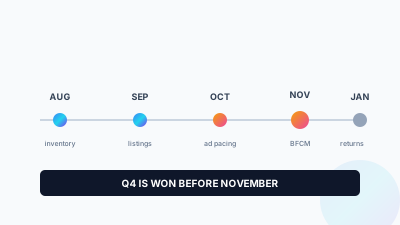
By the time Black Friday actually arrives, almost every decision that determines how it goes has already been made. Inventory is either in an FBA warehouse or it isn't. Listings are either optimized for gift-intent search terms or they aren't. Advertising budgets are either scaled to absorb higher CPCs or they're about to get outbid all week. The brands that have a good Q4 aren't reacting well during BFCM week - they're executing a plan that was locked in two months earlier. This is the phase-by-phase version of that plan.
Phase 1: Inventory Deadlines (August to September)
Inventory is the phase with the least room for error, because FBA inbound shipping and processing takes real time, and Amazon's own inbound capacity gets tighter as every other seller has the same idea at the same time. Work backward from your first meaningful Q4 sales date, not from Black Friday itself - early holiday shopping now starts well before November for a large share of shoppers.
Three things need to happen in this window: reconcile your demand forecast against last year's actuals plus your realistic growth trajectory, not a hopeful one; place inbound shipments early enough to clear receiving queues before they back up; and build in safety stock for the SKUs that historically spike hardest, since a mid-BFCM stockout doesn't just lose that week's sales, it costs you the organic rank you built getting there.
Overstocking to avoid a stockout can hurt your Inventory Performance Index just as much as understocking can hurt your sales - and a weak IPI score can restrict your FBA storage limits right when you need capacity most. Size inventory to a realistic demand model, not a worst-case hedge in either direction.
Phase 2: Listing and Content Readiness (September to October)
Holiday shoppers search differently than everyday shoppers - "gift for," "stocking stuffer," "holiday bundle," and gift-recipient-specific modifiers all spike in volume through Q4. Audit your titles, bullets, and backend search terms for gift-intent keyword coverage before the volume shows up, not after you notice you're missing it in the Search Query Performance report mid-November.
This is also the window to refresh A+ Content and Sponsored Brands creative with any holiday-relevant messaging, confirm your main image and gallery still hold up against the increased competitive density in search results, and make sure review velocity is healthy heading into the highest-traffic month of the year - a thin review count becomes a much bigger conversion drag when shoppers are comparison-shopping harder than usual.
Phase 3: Advertising Pacing Before the Surge (October)
CPCs climb through Q4 as every advertiser in your category increases spend simultaneously, and campaigns still running on summer bid levels quietly lose auction share right as demand peaks. Increase bids and budgets ahead of the surge, not reactively once you notice impression share dropping - by the time the drop is visible in your dashboard, you've already lost several days of the highest-value traffic of the year.
Review dayparting schedules against last year's hourly conversion patterns specifically for BFCM week, since shopping behavior during the event itself often doesn't match your normal weekly pattern. And plan Lightning Deals, coupons, and any Deal of the Day submissions well ahead of Amazon's lead-time requirements - these programs have submission deadlines that close weeks before the deal actually runs.
Phase 4: BFCM Week Execution
During the event itself, the job shifts from planning to monitoring. Check inventory velocity daily, not weekly - a SKU that looked adequately stocked on Monday can be gone by Wednesday during a genuine demand spike. Watch budget pacing closely enough to catch a campaign hitting its daily cap mid-morning and missing the rest of a high-traffic day. And resist the urge to make large structural changes to campaigns during the week itself; this is a week for tactical bid and budget adjustments, not architectural rebuilds that need a learning period the algorithm doesn't have time to complete before the event ends.
Phase 5: The January Comedown Nobody Plans For
Q4 planning tends to stop at December 31st, which is a mistake - the weeks after the holiday create their own distinct set of problems. Return rates spike in January as gift recipients process unwanted items, which affects both refund costs and, for some categories, review sentiment. Excess inventory from a demand forecast that ran slightly hot needs a clearance plan before it becomes long-term storage fee liability. And competitive ad pricing typically eases as Q4 spend pulls back across the category, which is often the best window of the year to test bid increases on terms that were too expensive to compete on in November.
The FBA Capacity Trap
Amazon sets FBA storage capacity limits per account, and those limits get tighter and more strictly enforced heading into peak season as warehouse space becomes genuinely scarce across the entire platform. A brand that hasn't built enough IPI score headroom going into Q4 can find its capacity capped right when it needs to send the most inventory of the year. This is one more reason inventory planning has to start in Phase 1, not Phase 3 - capacity constraints compound with lead-time constraints, and neither can be solved with two weeks' notice.
A Realistic Q4 Readiness Checklist
By early August: finalize demand forecast and inbound shipping plan. By mid-September: confirm inventory is landing in FBA on schedule and IPI score has enough headroom for capacity limits. By late September: complete gift-intent keyword and content audit. By mid-October: advertising budgets and bids scaled ahead of CPC increases, Lightning Deal and coupon submissions locked in. Throughout BFCM week: daily inventory and budget pacing checks, no structural campaign rebuilds. By mid-January: return rate and clearance plan in motion for excess stock, competitive ad pricing reassessed for post-holiday opportunity.
Frequently Asked Questions
August and September for inventory, which is the phase with the least room for error. Finalize your demand forecast and inbound shipping plan by early August, then confirm by mid-September that stock is landing in FBA on schedule and your IPI score has headroom for capacity limits. Work backward from your first real Q4 sales date.
Raise them ahead of the surge, in October. CPCs climb through Q4 as every advertiser in your category scales spend at once, and campaigns still running summer bid levels quietly lose auction share. By the time you notice impression share dropping in the dashboard, you've already lost several days of the year's highest value traffic.
Don't. BFCM week is for tactical bid and budget adjustments, not architectural rebuilds that need a learning period the algorithm won't finish before the event ends. That week the job shifts to monitoring: check inventory velocity daily, and watch budget pacing closely enough to catch a campaign capping out mid-morning on a high traffic day.
Three things. Return rates spike as gift recipients process unwanted items, which affects refund costs and, in some categories, review sentiment. Excess inventory from a forecast that ran hot needs a clearance plan before it becomes long term storage fee liability. And ad pricing usually eases, making it a good window to test expensive terms.