1. Executive Summary & Macro-Economics of Amazon Storage Policy
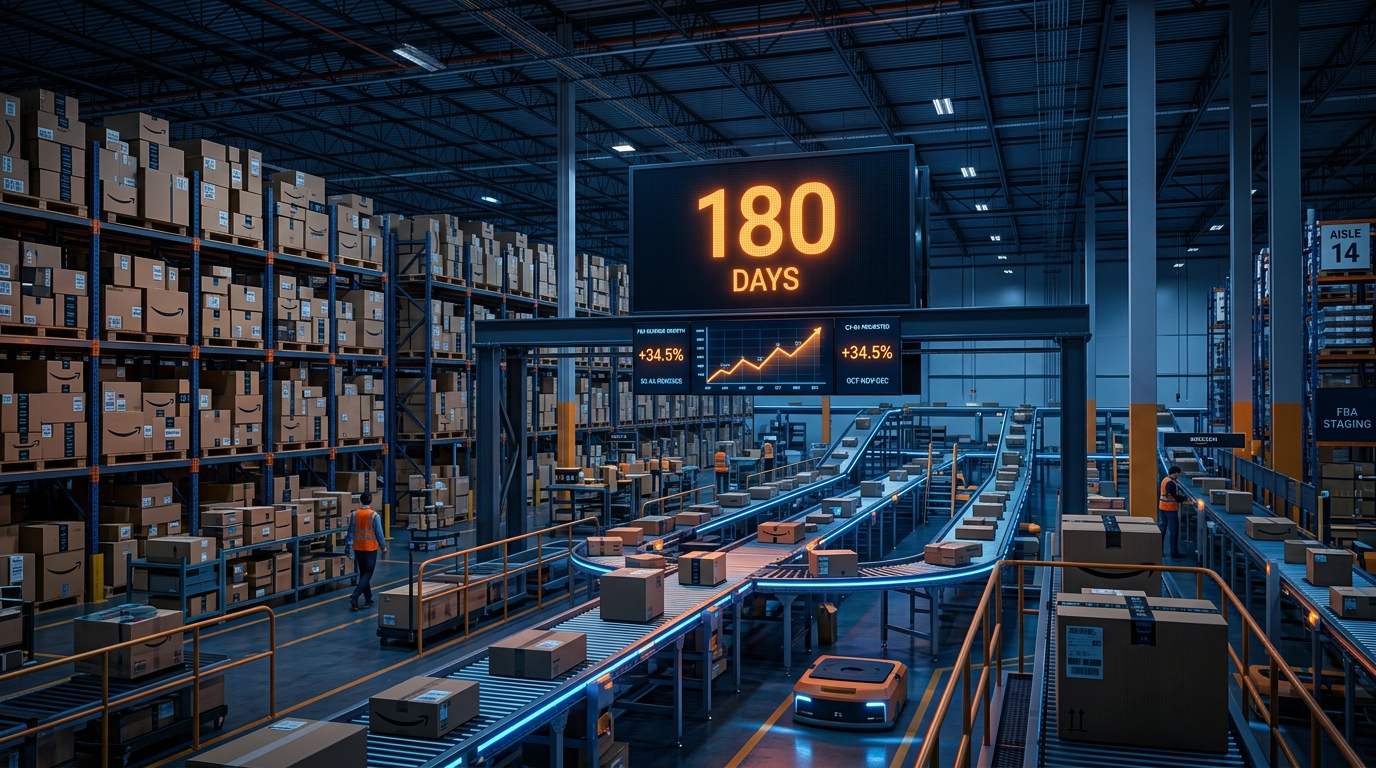
Amazon's Aged Inventory Surcharge (formerly referred to as Long-Term Storage Fees or LTSF) represents one of the most aggressive cost-containment mechanisms enforced across the Amazon Fulfillment Network. As Amazon expands its regionalized fulfillment architecture, warehouse capacity must be optimized for fast-turning, high-velocity consumer goods. Products that sit idle in fulfillment centers consume critical rack space, decrease Amazon's inventory turnover metrics, and drive up operational overhead.
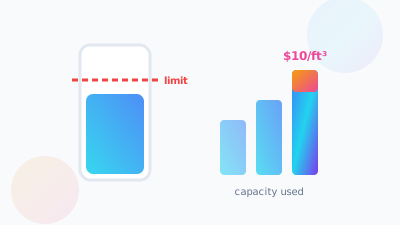
To penalize inefficient catalog management, Amazon charges recurring monthly surcharges on all units stored in FBA warehouses for longer than 180 days. These surcharges are assessed in addition to standard monthly FBA storage fees (which range from $0.78 to $2.40 per cubic foot depending on standard vs. peak Q4 holiday rates).
By the time inventory crosses the 365-day threshold, cumulative storage penalties can reach **$6.90+ per cubic foot per month** (or a minimum per-unit surcharge of $0.15 per unit, whichever is greater). For brands carrying thousands of stagnant units, unmanaged aged inventory rapidly turns profitable SKUs into cash-draining liabilities.
Amazon calculates aged inventory surcharges based on official inventory age snapshots taken at **11:59 PM PST on the 14th of every month**. Surcharges are billed directly to your Seller Central disbursement account on the 15th. Submitting an official FBA Removal Order, Liquidation Request, or Dispose Order before 11:59 PM PST on the 14th automatically exempts those units from the upcoming monthly fee cycle.
2. Complete 2026 Aged Inventory Surcharge Tier Matrix
Amazon evaluates inventory age using a First-In, First-Out (FIFO) accounting model. When a customer purchases a unit, Amazon credits the sale against the oldest inventory unit of that ASIN currently stored in their fulfillment network.
The table below details the exact monthly surcharge rates across all official inventory age brackets for standard-size and oversize items:
| Inventory Age Tier | Monthly Surcharge / cu ft | Per-Unit Minimum Surcharge | Annualized Cost / cu ft | Strategic Risk Tier |
|---|---|---|---|---|
| 0 to 180 Days | $0.00 (Exempt) | $0.00 | $0.00 | Compliant Storage Zone |
| 181 to 210 Days | $0.50 | $0.15 | $6.00 | Low Warning Tier |
| 211 to 270 Days | $1.50 | $0.45 | $18.00 | Moderate Margin Risk |
| 271 to 330 Days | $3.80 | $1.15 | $45.60 | High Surcharge Danger |
| 331 to 365 Days | $5.40 | $1.65 | $64.80 | Severe Capital Erosion |
| 365+ Days | $6.90+ | $2.25+ | $82.80+ | Critical Loss / Liquidate |
3. Mathematical Model: Hold vs. Liquidate Decision Threshold
Sellers frequently struggle to decide whether to discount and hold stagnant inventory or liquidate immediately. To eliminate emotional decision-making, apply this quantitative financial formula:
(Net Unit Margin - Target Liquidation Recovery) / (Monthly Standard Storage + Monthly Aged Surcharge + Opportunity Cost)
Worked Example: Suppose you sell a premium kitchen gadget for $40 with a COGS of $12 and current net FBA margin of $14. The item takes up 0.4 cubic feet and is entering the 271-330 day bracket ($3.80/cu ft surcharge).
- Monthly Aged Surcharge =
0.4 cu ft * $3.80 = $1.52 / unit / month - Standard Monthly Storage =
0.4 cu ft * $0.87 = $0.35 / unit / month - Total Monthly Holding Expense = $1.87 per unit per month
If holding the inventory for another 4 months incurs 4 * $1.87 = $7.48 in cumulative storage fees, your net margin drops from $14.00 to just $6.52. Liquidating via Amazon Outlet at a 25% discount ($30 price point) yields an immediate net margin of $7.50 without incurring future storage surcharges. Conclusion: Liquidating immediately produces higher net cash flow than holding.
4. The 6-Stage Tactical Clearance Framework
Deploy this systematic 6-stage operational framework to clear aging inventory prior to fee snapshot dates:
Stage 1: Dynamic Price Elasticity Testing & Coupon Stacking
Initiate automated price decay algorithms dropping retail price by 3% to 5% every 3 days. Pair price reductions with a 15% Green Coupon Badge. Green coupon badges increase search page click-through rates by up to 34%, capturing bargain-seeking shoppers.
Stage 2: Targeted Off-Peak PPC Clearance Campaigns
Launch dedicated Sponsored Products campaigns targeting exact match terms with high bids. Set campaign goal to break-even TACoS. Converting ad clicks into orders rapidly boosts unit velocity, which improves your overall Inventory Performance Index (IPI) score.
Stage 3: Amazon Outlet Deals Carousel Placement
Check your Seller Central Deals Dashboard for Outlet eligibility. SKUs with over 90 days of inventory and a 20%+ discount qualify for inclusion in the high-traffic Amazon Outlet deals portal.
Stage 4: Virtual Bundling with Bestseller SKUs
Utilize the Amazon Brand Registry Virtual Bundles API to bundle your aging SKU with a Top 10 category bestseller at a 15% combined discount. This leverages the traffic of your flagship product to clear secondary inventory without repacking physical units.
Stage 5: FBA Grade and Resell Program
For returned or unbox-damaged inventory, enroll units into FBA Grade and Resell. Amazon inspects, relabels, and lists the item under Used - Like New condition, unlocking secondary market sales.
Stage 6: FBA Liquidations vs. Removal vs. Disposal
When stock cannot be sold organically, evaluate removal channels:
| Removal Method | Per-Unit Amazon Fee | Financial Recovery Rate | Best Used For |
|---|---|---|---|
| FBA Liquidation | 15% Liquidation Surcharge | 5% - 10% of ASP Recovery | High-COGS Standard Items |
| Return to 3PL / HQ | $0.97 - $2.48 / unit | Stock Recovered for Off-Amazon Sales | High-Value / Re-sellable Stock |
| Amazon Disposal | $0.97 - $2.20 / unit | 0% (Complete Loss) | Low-Value Unsellable Goods |
5. Automated Python Script for Aged Inventory Risk Auditing
To identify at-risk inventory before Amazon's 14th snapshot date, download your Manage FBA Inventory Report from Seller Central and run this automated Python audit script:
import pandas as pd

# Load Amazon Manage FBA Inventory Report (TSV format)
df = pd.read_csv('ManageFBAInventoryReport.txt', sep='	')

# Calculate cubic feet per unit
df['cubic_feet'] = (df['Sales-Channel-Length'] * df['Sales-Channel-Width'] * df['Sales-Channel-Height']) / 1728.0

# Isolate aged inventory buckets
aged_180_plus = df[df['inv-age-181-to-210-days'] > 0]
aged_365_plus = df[df['inv-age-365-plus-days'] > 0]

# Calculate estimated monthly surcharge exposure
df['monthly_surcharge_est'] = (
    (df['inv-age-181-to-210-days'] * df['cubic_feet'] * 0.50) +
    (df['inv-age-211-to-270-days'] * df['cubic_feet'] * 1.50) +
    (df['inv-age-271-to-330-days'] * df['cubic_feet'] * 3.80) +
    (df['inv-age-331-to-365-days'] * df['cubic_feet'] * 5.40) +
    (df['inv-age-365-plus-days'] * df['cubic_feet'] * 6.90)
)

# Output Top 10 At-Risk SKUs requiring immediate removal/clearance
at_risk = df.sort_values(by='monthly_surcharge_est', ascending=False)[
    ['sku', 'asin', 'product-name', 'cubic_feet', 'inv-age-365-plus-days', 'monthly_surcharge_est']
]

print("--- TOP AT-RISK AGED INVENTORY SKUS ---")
print(at_risk.head(10).to_string(index=False))
Frequently Asked Questions
When exactly does Amazon evaluate inventory age for surcharge billing?
Amazon calculates aged inventory fees based on inventory age snapshots taken at 11:59 PM PST on the 14th of every month. Charges are billed on the 15th.
Does submitting a removal order before the 14th stop aged inventory surcharges?
Yes. As long as your removal, disposal, or liquidation request is submitted in Seller Central before 11:59 PM PST on the 14th, those units are excluded from the fee snapshot, even if physical pickup occurs days later.
How do aged inventory surcharges affect my Inventory Performance Index (IPI) score?
Holding inventory over 180 days directly depresses your FBA Sell-Through Rate metric, lowering your total IPI score. Maintaining an IPI score above 550 requires active clearance of aged stock.
Are new product launches exempt from aged inventory surcharges?
All new ASINs enrolled in the FBA New Selection Program receive 180 days of free storage for the first 100 units shipped, completely shielding launches from initial storage penalties.
Ready to Eliminate Aged Inventory Fees & Protect Margins?
Book a complimentary consultation with SellerVine's FBA Operations team. We will audit your inventory health reports, run custom Python risk scripts, and build an automated clearance plan.
Book a Free Inventory Clearance Audit Call