Two Different Businesses Wearing the Same Amazon Logo
"Which one should I use, Seller Central or Vendor Central?" is one of the most common questions we get from brands before they've sold a single unit on Amazon - and it's usually asked like it's a settings toggle. It isn't. Seller Central and Vendor Central aren't two dashboards for the same business model; they're two different business models that happen to share a login page. Choosing wrong doesn't just mean a worse UI, it means signing up for a cash flow structure, a pricing relationship, and a compliance burden that can take a year or more to unwind.
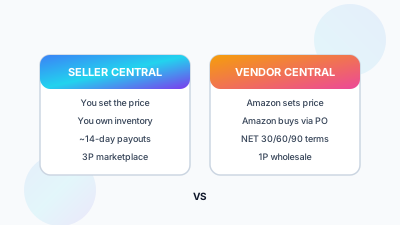
The short version: on Seller Central, you're the retailer. On Vendor Central, you're the manufacturer selling wholesale to a retailer - and that retailer happens to be Amazon.
Seller Central: You're the Retailer
Seller Central is the third-party (3P) marketplace model. You list your products, you set the retail price, you retain ownership of inventory until it sells, and you choose your own fulfillment method - Fulfilled by Amazon (FBA), where Amazon warehouses and ships for you, or Fulfilled by Merchant (FBM), where you handle logistics yourself.
Access is self-service: anyone can sign up, subject to Amazon's standard seller requirements and category-specific approval gates. You get direct, granular access to your own sales, traffic, and advertising data, and you're paid on Amazon's standard seller disbursement schedule - typically every two weeks, with funds landing relatively close to the sale.
Vendor Central: You're the Manufacturer
Vendor Central is the first-party (1P) wholesale model. Amazon issues purchase orders for your products at a negotiated wholesale cost, takes ownership of the inventory once it accepts the PO, and resells it under "Ships from and sold by Amazon.com." You invoice Amazon for the PO; Amazon handles the retail listing, pricing, fulfillment, and customer service from there.
Vendor Central has historically been invitation-only, extended to brands Amazon's retail team wants to buy from directly, though the paths in have shifted over time and are worth confirming directly with Amazon or a partner rather than assuming. In recent years, Amazon has also pushed a growing number of smaller and mid-sized vendors toward Seller Central, so "we were invited to Vendor Central" is no longer the automatic green light it once was - invitation doesn't necessarily mean it's still the better model for your business size today.
The Control Question: Who Sets the Price
This is the single biggest practical difference, and the one that surprises new vendors the most. On Seller Central, you set your own retail price, subject to Amazon's fair-pricing policies. On Vendor Central, Amazon sets the retail price - you negotiate the wholesale cost Amazon pays you, but what the shopper actually pays is Amazon's call, and it can move independently of your wholesale terms in ways that compress your effective margin without warning.
This matters most for brands with tight MAP (Minimum Advertised Price) policies or existing retail partnerships elsewhere. Amazon can, and periodically does, price below what other retail partners consider acceptable, which creates channel conflict that Seller Central's seller-controlled pricing avoids by design.
The Cash Flow Question: Payout Timing vs. Payment Terms
Seller Central pays out roughly every two weeks on completed sales. Vendor Central runs on invoice payment terms - commonly NET 30, 60, or even 90 days from invoice, depending on the negotiated agreement. For a brand managing production runs and inventory financing, that gap between shipping product to Amazon and actually getting paid for it can be the difference between comfortable cash flow and a working-capital crunch, especially heading into a demand spike like Q4.
Model your cash conversion cycle under Vendor Central payment terms before accepting an invitation, not after your first PO. A brand that can comfortably self-finance 60 to 90 days of inventory production is in a very different position than one relying on sales revenue to fund the next run.
The Compliance Question: Chargebacks and OTIF
Vendor Central comes with a compliance framework that has no real equivalent on Seller Central. Amazon enforces strict requirements around case pack sizing, labeling, ASN (Advance Shipping Notice) accuracy, and OTIF (On Time In Full) delivery performance - and violations generate chargebacks deducted directly from vendor payments. These aren't small: cumulative chargebacks from packaging non-compliance, late shipments, and short shipments are one of the most common reasons vendor margins quietly erode over time, often invisibly until someone actually audits the deduction line items against the original PO value.
Seller Central has its own compliance requirements - account health metrics, policy violations, listing accuracy - but nothing structurally comparable to the automated chargeback system built into the vendor relationship.
The Data Question: What You Can Actually See
Seller Central gives you close to real-time visibility into unit sales, sessions, conversion rate, advertising performance, and inventory health, all at the SKU level, updated daily. Vendor Central's reporting, through Vendor Central's own dashboard and Amazon Retail Analytics, is comparatively coarser and often lagged, particularly for sell-through and inventory data. Brand Analytics and Search Query Performance are available to both models once you're enrolled in Brand Registry, which somewhat levels the keyword-level visibility gap, but day-to-day operational data still tends to be more granular and faster on Seller Central.
Can You Run Both? The Hybrid Model
Some brands do run a hybrid presence - part of the catalog on Vendor Central, part on Seller Central, often for different sets of SKUs or to maintain a wholesale relationship for certain products while retaining pricing control on others. It's operationally more complex, requires careful catalog segmentation to avoid the same ASIN existing on both sides (which Amazon actively discourages and will often resolve in Amazon's favor), and works best for brands with enough internal operations capacity to manage two distinct compliance and reporting systems in parallel. For most small and mid-sized brands, picking one model and executing it well outperforms running both models adequately.
How We Actually Help Brands Decide
When we're brought in to help a brand choose, the questions that actually move the decision are rarely about which platform "looks more professional." They're about margin structure (can you absorb Amazon setting your retail price?), cash flow tolerance (can the business self-finance NET 60 to 90 terms?), operational capacity (can you handle OTIF and chargeback compliance without it eating your margin?), and growth stage (is retaining pricing control worth more to you right now than the "sold by Amazon" positioning?). None of those questions have a universally right answer - they have a right answer for your specific business, at your specific stage, and that's the audit worth doing before you accept an invitation or file a self-service application.
Frequently Asked Questions
They're two different business models, not two dashboards. On Seller Central you're the retailer: you list products, set the retail price, own inventory until it sells, and pick FBA or FBM. On Vendor Central you're the manufacturer selling wholesale to Amazon, which issues purchase orders, takes ownership, and resells under Ships from and sold by Amazon.com.
Amazon does. You negotiate the wholesale cost Amazon pays you, but what the shopper pays is Amazon's call and it can move independently of your wholesale terms, compressing your effective margin without warning. That matters most for brands with tight MAP policies or other retail partners, since Amazon can price below what those partners find acceptable.
Vendor Central runs on invoice payment terms, commonly NET 30, 60, or even 90 days from invoice depending on the negotiated agreement. Seller Central pays out roughly every two weeks on completed sales. Model your cash conversion cycle under those vendor terms before accepting an invitation, especially if sales revenue funds your next production run.
Chargebacks are deductions taken directly from your vendor payments when you miss Amazon's requirements on case pack sizing, labeling, ASN accuracy, or OTIF delivery performance. They're one of the most common reasons vendor margins quietly erode, often invisibly until someone audits the deduction line items against the original PO value. Seller Central has no structurally comparable system.