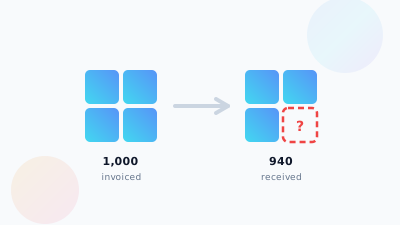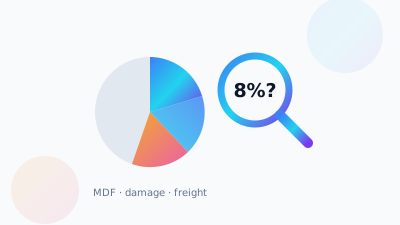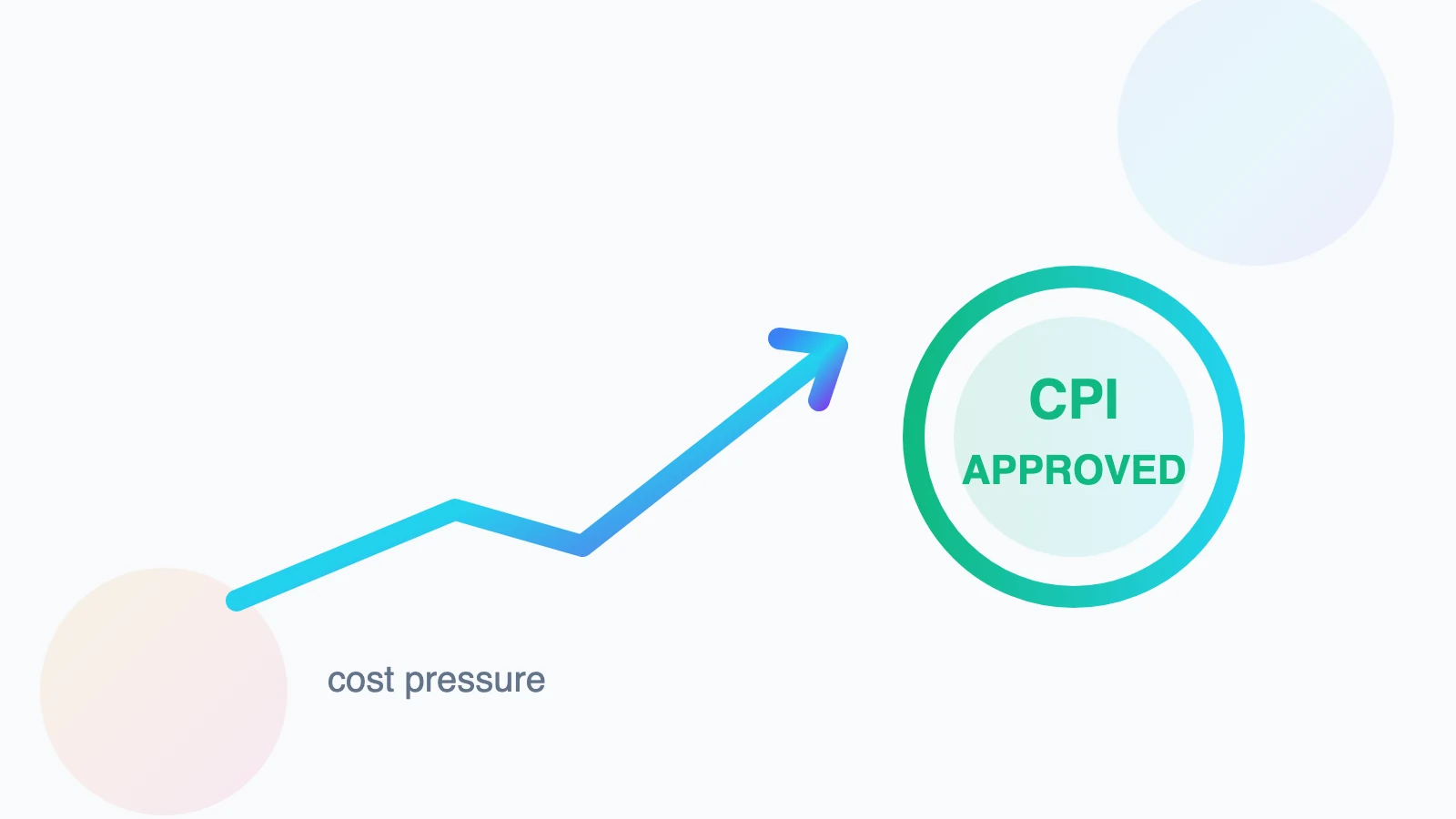
Every vendor eventually faces the same wall: your input costs rise - materials, freight, labour - but Amazon, unlike virtually every other retail customer, simply refuses the price increase. The request sits in Vendor Central for weeks, then comes back rejected with no explanation. Meanwhile your margin on every purchase order quietly erodes.
Amazon’s default position is no. Its buying systems are built to resist cost increases automatically, and a human buyer only engages when your request survives the algorithmic gauntlet. Understanding that machinery - what it checks, when it defers to humans, and what evidence moves it - is the difference between vendors who get increases approved in one cycle and vendors who submit the same rejected request four times.
This is the process we run with 1P vendors, refined across categories from groceries to consumer electronics.
How Amazon Actually Evaluates a Cost Increase
When you submit a cost price increase (CPI) in Vendor Central, it is scored before any buyer sees it. The evaluation weighs:
- Competitive price data: Amazon scrapes the market. If it believes it can source the item cheaper - or that a rival retailer sells at a price implying a lower cost - the increase is rejected.
- Profitability (PPM) impact: Amazon models its own net margin on your ASINs. An increase that pushes an item below Amazon’s internal profitability threshold triggers rejection or, worse, CRaP status ("Can’t Realise a Profit").
- Your sales velocity and irreplaceability: items with strong glance views, high conversion, and no substitutable competitor get far more human attention.
- Category inflation context: during broad commodity inflation, category-level allowances open up; requests aligned to a recognised cost driver clear more easily.
Implication: a bare "we need 6% more" request is dead on arrival. The request must be built to survive the automated screen and give a human buyer a defensible file to approve.
Building the Cost Justification File
Buyers approve increases they can defend to their own managers. Your job is to hand them that defence, pre-packaged:
- Cost driver evidence: commodity indices (resin, steel, cotton, cocoa - whatever applies), freight rate benchmarks, supplier letters showing your own input increases. Third-party sources beat internal spreadsheets.
- Bridge math: a simple walk from old cost to new cost - "materials +9%, inbound freight +14%, labour +5% = landed cost +7.2%". One slide, defensible arithmetic.
- Margin history: show your vendor-level or ASIN-level margin trend. Demonstrating you absorbed pressure for several quarters before asking builds enormous credibility.
- What Amazon keeps: spell out retained retail competitiveness - evidence the shelf price can hold, or that you will support the increase with funding elsewhere (S&S, coupons, AMS spend).
Submit the increase in Vendor Central first (it must exist in the system), then send the file to your buyer or Vendor Manager referencing the case. If you have no assigned VM, the file goes as a case attachment - still worth doing.
Timing: When to Submit and When to Wait
The same request approved in March can be rejected in October. Timing levers that matter:
- Annual Vendor Negotiations: Amazon expects cost conversations during AVN season (typically Q4 to Q1). Increases folded into a broader terms package trade better than standalone asks.
- Post-Q4 lull: January to February buyers have bandwidth; October buyers do not, and nothing risky gets approved before peak.
- Lead time: Amazon typically needs 30 to 90 days from approval to reflect new costs on POs. Submit well before your own cost pressure becomes existential.
- After demonstrated performance: a quarter of clean, on-time, in-full POs and growing sell-through is the best backdrop a request can have.
When Amazon Says No - or Stops Ordering
Rejection is not the end of the process; it is a negotiation move. Your realistic options, in escalating order:
- Resubmit with better evidence: many rejections are algorithmic. A resubmission timed and documented properly often clears.
- Trade structure for price: offer something Amazon values - longer payment terms, a temporary promotional commitment, freight programme participation - in exchange for the cost increase.
- Selective increases: push increases only on ASINs where Amazon has no alternative source and strong customer demand; hold others steady.
- Accept CRaP consequences deliberately: if Amazon stops ordering an unprofitable ASIN, that is not automatically a loss - some items are better sold 3P at sustainable margin than 1P at a loss.
- Hybrid 1P/3P strategy: the credible ability to move products to Seller Central is the strongest quiet leverage a vendor has. Amazon models this too.
Never bluff a supply cut you will not follow through on. Buyers remember, and your next three requests pay for it.
Protecting Margin Between Increases
Because CPIs are slow and partial, resilient vendors defend margin on other fronts simultaneously: audit co-op deductions and chargebacks (recovered dollars are margin), rationalise the catalog so loss-making ASINs are not subsidised by winners, use pack-size and configuration changes to reset price-per-unit economics, and shift mix toward items where your cost position is strongest. A 6% cost increase approved on 60% of volume plus two points of recovered deductions frequently beats the original ask.
Frequently Asked Questions
How long does an Amazon cost increase take to approve?
Automated rejections come back within days. A well-documented request that reaches a human buyer typically resolves in 2 to 6 weeks, and new costs usually appear on purchase orders 30 to 90 days after approval. Plan for a full quarter end-to-end.
Why does Amazon keep rejecting my cost increase?
The most common reasons: competitive price data suggests the market has not moved, the increase would push the item below Amazon’s internal profitability threshold, or the request lacks third-party cost-driver evidence. Requests without a documented justification file rarely survive the automated screen.
What is CRaP status and how does it relate to cost increases?
CRaP ("Can’t Realise a Profit") is Amazon’s internal flag for items it loses money selling. A cost increase can push an ASIN into CRaP, after which Amazon may stop ordering it, suppress marketing content, or pressure you for funding. Model Amazon’s economics before you submit, not after.
Can Amazon just stop ordering if I insist on higher costs?
Yes - Amazon has no obligation to keep ordering. That is why leverage matters: irreplaceable products, strong sell-through, and a credible 3P alternative all raise the cost to Amazon of walking away. Selective increases on your strongest ASINs are usually safer than blanket demands.
Should I move to 3P instead of fighting for cost increases?
Sometimes, for part of the catalog. Items Amazon refuses to buy profitably can often earn healthier margins sold 3P at your own retail price. Many mature brands run hybrid 1P/3P deliberately - and the existence of that option itself strengthens your 1P negotiating position.