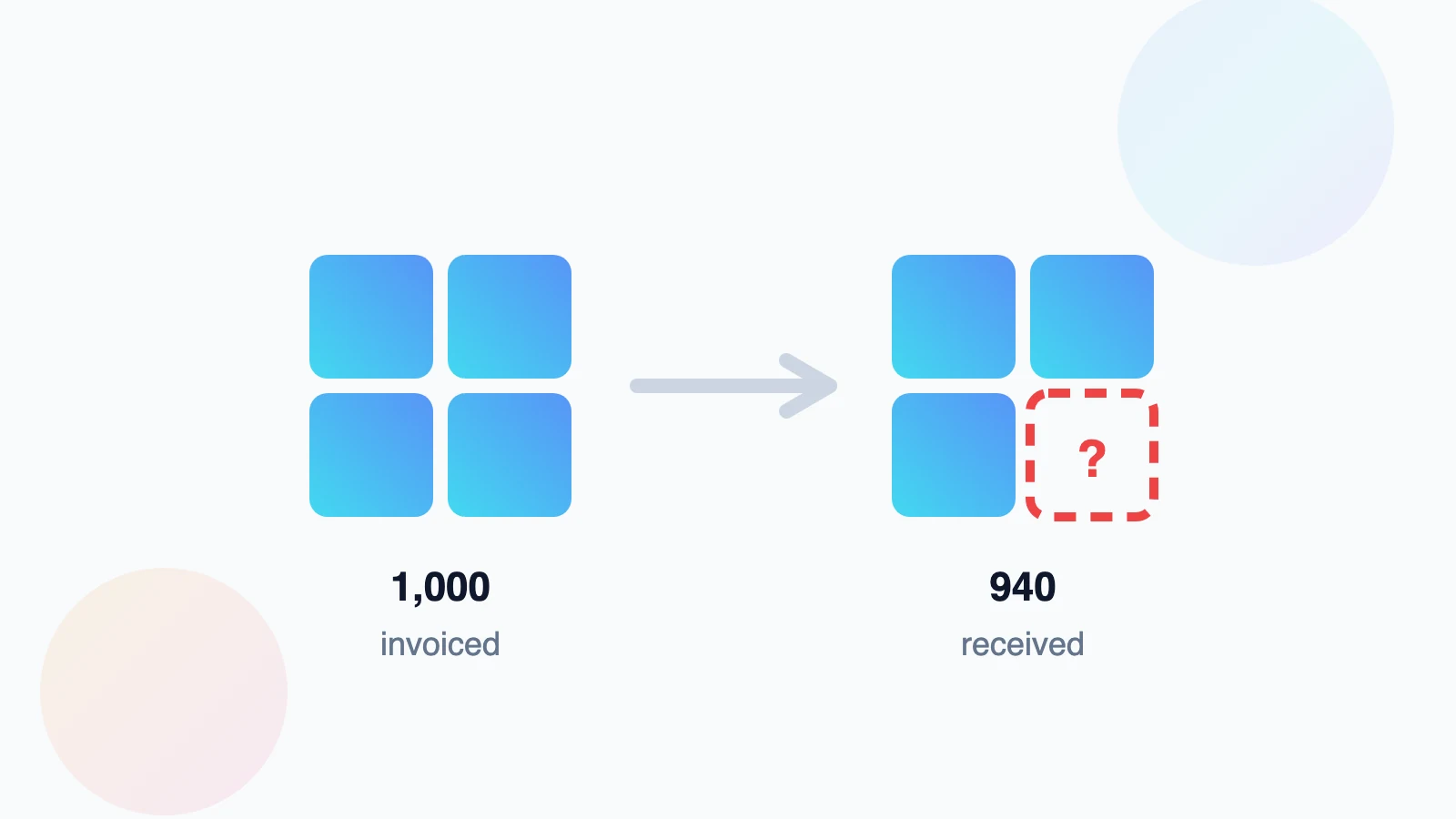
A shortage claim is Amazon telling you, in effect: "You invoiced us for 1,000 units, but we only received 940 - so we are paying for 940." The 60-unit difference is deducted from your remittance automatically, and unless you dispute it with evidence, that money is gone.
For many 1P vendors, shortage claims are the single largest source of unplanned deductions - 2% to 8% of invoiced value, month after month. The uncomfortable truth is that most of it is recoverable: industry-wide, well-documented disputes succeed far more often than they fail, because the root cause is usually a receiving or matching discrepancy on Amazon’s side, not missing product.
Here is how shortage claims actually arise, the evidence that wins disputes, and the operational changes that stop the bleeding permanently.
Why Amazon Claims Shortages on Complete Shipments
Genuine theft or loss is the minority case. Most shortage claims trace back to process friction between your shipping paperwork and Amazon’s receiving systems:
- Partial receiving at the FC: a pallet is checked in over several days; the invoice is matched against the first scan, and the rest books as "short" even though it arrived.
- Carton-level vs unit-level mismatches: Amazon receives master cartons but your invoice lines are in eaches - unit conversion errors create phantom shortages.
- ASIN mapping errors: the units arrived, but were received against a different ASIN or a different PO than the one invoiced.
- Split shipments: one PO shipped across two trucks; the second truck’s units are claimed short before they are receipted.
- Overage-shortage offsets never applied: Amazon received extra units of one line and short of another, and the offset was not netted.
Understanding the mechanism matters because your evidence must target it: you are not proving Amazon is dishonest, you are proving the goods physically arrived and the matching failed.
The Evidence Package That Wins Disputes
Amazon’s dispute reviewers look for an unbroken documentary chain from your dock to their receipt. The gold-standard package:
| Document | What it proves |
|---|---|
| Signed Bill of Lading (BOL) | What left your facility - pallet count, weight, PO references, carrier signature |
| Proof of Delivery (POD) | The same freight physically arrived at Amazon’s FC, signed and dated |
| Packing list / carton manifest | Line-level contents: which ASINs, in what quantities, in which cartons |
| PO confirmation | The quantities Amazon ordered and confirmed |
| Invoice | The exact lines and quantities billed |
| ASN (advance shipment notice) | That you told Amazon precisely what was coming, before it arrived |
The single most decisive document is a clean POD with matching weights and pallet counts. If the carrier-signed delivery receipt shows the same pallets and weight that left your dock, Amazon’s "we received less" position collapses.
Filing the Dispute: Process and Cadence
Shortage disputes are filed in Vendor Central under Payments → Invoice inquiry / dispute, per invoice. Practical rules from hundreds of filings:
- Dispute fast: success rates fall with age. Build a weekly or bi-weekly cadence - export new shortage deductions, match documents, file.
- One clean claim per invoice: reference the invoice, the PO, the exact short-claimed lines, attach the full chain, and state the amount you expect reversed.
- Escalate methodically: if a well-evidenced dispute is denied with a generic response, re-open it citing the specific documents the denial ignored. Persistence with the same evidence, properly labelled, wins a surprising share of second passes.
- Track everything: a simple dispute ledger (invoice, amount, filed date, status, recovered) tells you your true recovery rate and where the biggest leaks are.
Stopping Shortages at the Source
Recovery is good; prevention is better. The operational changes that most reduce future claims:
- ASN accuracy above all: the closer your ASN matches physical cartons (SSCC labels, carton-level contents), the cleaner Amazon’s receiving scan-match, and the fewer phantom shortages.
- Carton and pallet labelling per Amazon routing guide: a large fraction of receiving friction is label-related; it also prevents chargebacks.
- Ship complete POs where possible: split shipments multiply matching failures. If you must split, split the PO first.
- Invoice after receipt confirmation for problem lanes: for FCs that repeatedly generate claims, delaying invoicing a few days until receipts post can eliminate the mismatch window entirely.
- Monitor by FC: shortage claims cluster at specific facilities. Data showing one FC generates 60% of your claims is also useful escalation ammunition.
When the Numbers Justify Outside Help
Below a few thousand dollars a month, an internal weekly routine handles disputes fine. Above that - or if you have never audited historical deductions - a systematic recovery project usually pays for itself quickly, because old, undisputed shortages compound: twelve months of a 4% shortage rate on $3M of receipts is $120,000 sitting in Amazon’s accounts, much of it documentable. Whether you run it internally or with a partner, the method is identical: reconstruct the documentary chain, file cleanly, escalate persistently, and fix the ASN process so the pipeline of new claims dries up.
Frequently Asked Questions
What percentage of Amazon shortage claims can actually be recovered?
With complete documentation (BOL, POD, packing list, ASN), the majority of disputed claims succeed - recovery rates of 60 to 90% on well-evidenced disputes are realistic. Undocumented disputes, by contrast, are routinely denied. The documentation chain is everything.
How long do I have to dispute a shortage claim?
File as quickly as possible - ideally within 30 days of the deduction appearing. Older claims can still be disputed, but success rates decline meaningfully with age, and very old claims may fall outside practical recovery windows. A weekly dispute cadence is the safest policy.
What is the difference between a shortage claim and a chargeback?
A shortage claim says Amazon received fewer units than you invoiced, and deducts the difference. A chargeback is a compliance penalty - for late delivery, labelling errors, ASN problems, and similar operational issues. They are disputed through different flows and require different evidence.
Why do my shortages cluster at certain fulfilment centres?
Receiving practices vary by facility - staffing, scan discipline, and how partial receipts are processed. Tracking claims by FC identifies problem lanes; that data supports both your disputes and, at scale, an escalation to your vendor manager about systematic receiving issues at a specific site.
Will disputing shortage claims hurt my relationship with Amazon?
No. Disputes are a normal, expected part of vendor operations, handled by payment operations teams - not your buyer. A professionally documented dispute has no bearing on buying decisions. Leaving money on the table does not earn goodwill; it just costs margin.