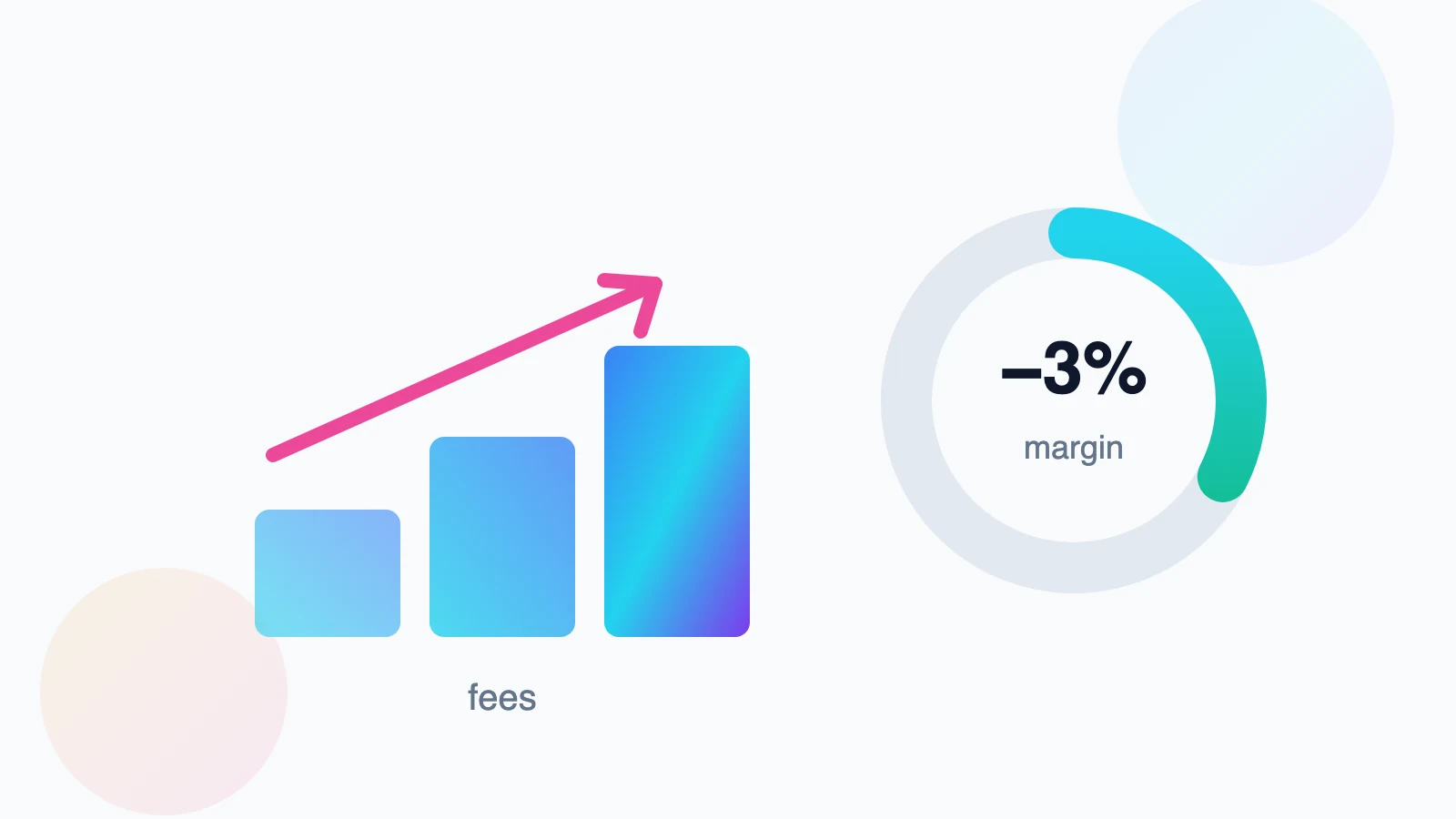
Every year, usually announced in December and effective between January and April, Amazon adjusts its FBA fee structure. And every year the announcement reads mildly - "average increase of around 3%" - while individual sellers open their fee preview and discover their hero SKU’s fulfilment cost jumped 11%, because averages conceal exactly where the pain concentrates.
Fee changes are not uniform. They land on specific size tiers, weight breaks, and program boundaries - and whether your catalog sits just inside or just outside those boundaries decides whether a change is a rounding error or a margin crisis. The sellers who respond well are not the ones who read the announcement; they are the ones who re-model their entire catalog against the new rate card within a week of it publishing.
This guide covers the recent structural changes that matter, the modelling process, and the mitigation plays - from packaging engineering to strategic repricing - that recover the margin.
The Structural Changes That Rewrote FBA Economics
Beyond annual rate tweaks, several structural changes in recent cycles permanently altered how fees accrue:
- Granular weight/size banding: fee tiers moved from broad buckets to fine-grained intervals (2oz bands for many standard sizes) - small physical differences now map directly to fee differences.
- Inbound placement service fees: a separate per-unit charge based on how many inbound locations you ship to - minimised-split shipments cost more per unit; distributed inbound costs less or nothing.
- Low-inventory-level fee: a surcharge when your inventory days-of-supply runs persistently low relative to demand - being understocked now costs money on every unit shipped.
- Aged-inventory surcharges tightening: escalating monthly charges beginning at 181 days, punitive past 271/365.
- Returns processing fee expansion: high-return-rate ASINs in more categories now pay per-return fees.
The direction is consistent: Amazon is pricing its network to reward fast-turning, well-forecast, efficiently-packaged inventory - and to make sellers pay for network inefficiency they cause.
Modelling a Fee Change Against Your Own Catalog
The only analysis that matters is per-SKU, against your dimensions and velocity:
- 1. Export the baseline: the FBA fee preview report (current fees per SKU) plus your own dimensions/weights as verified - not as designed; Amazon’s cubiscan measurements govern.
- 2. Apply the new rate card: map each SKU to its new tier and fee. Amazon publishes comparison tables; at catalog scale this is a spreadsheet join, not a reading exercise.
- 3. Compute margin deltas: new fee minus old fee, times monthly units - rank by absolute dollars, not percentage. A $0.35 rise on your 4,000-unit hero outranks a $2 rise on a long-tail SKU.
- 4. Flag boundary SKUs: anything within ~10% of a size/weight tier boundary in either direction - these are your engineering opportunities and risks.
- 5. Recheck measured attributes: dispute wrong cubiscan data (remeasurement requests) - a stale measurement one tier too high is free money on every unit.
The Mitigation Playbook
Packaging engineering (the biggest lever)
With fine-grained bands, shaving 0.4oz or 0.3″ can drop a tier: lighter mailers instead of boxes, right-sized cartons, thinner but adequate protection, removing air. Audit every boundary SKU with the fee table open - a one-tier drop is typically $0.25 to $1.20 per unit, forever.
Price and pack architecture
Where fees rose structurally, pass through selectively: raise price on low-elasticity SKUs (test, don’t assume), migrate value buyers to multi-packs where per-unit fulfilment cost amortises, and rebalance coupon/deal cadence rather than defending old price points reflexively.
Inventory placement and flow
Choose the inbound placement option that nets cheapest for your volume (distributed inbound often wins at scale), fix chronic low-stock SKUs before the low-inventory fee compounds the lost-sales cost, and liquidate aged stock before surcharge cliffs (181/271 days) rather than after.
Program arbitrage
Re-evaluate SIPP/packaging programs, Small & Light successors (Low-Price FBA fees), and - for oversize or slow-turn items - whether FBM/3PL beats FBA post-change: annual fee updates regularly flip that calculus for boundary categories.
Protecting the P&L Story Internally
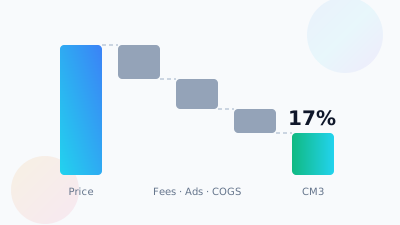
For brands with finance oversight, fee changes distort year-over-year comparisons: a flat-revenue quarter can hide two points of structural margin loss that management attributes to "performance". Build the bridge explicitly - last year’s margin, fee-change impact quantified from the model, mitigation recovered, net position. That framing turns an ambient squeeze into a managed line item, and it is also the evidence base for the pricing decisions above. Sellers who quantify the hit negotiate better internally (budgets) and externally (supplier costs, 1P terms) than sellers who just feel poorer.
Frequently Asked Questions
When do Amazon FBA fee changes take effect?
The pattern for recent years: announcements in late Q4, with changes phased in between mid-January and April - different fee types (fulfilment, storage, referral, surcharges) often have different effective dates. Model against the published effective calendar, not the announcement date.
How do I see exactly what I will pay per SKU?
The FBA Revenue Calculator (per ASIN) and the Fee Preview report (catalog-wide) show current fees; during change windows Amazon typically publishes side-by-side previews. Verify your measured dimensions too - fees follow Amazon’s cubiscan data, which is disputable when wrong.
Are fee increases negotiable?
The rate card is not negotiable for 3P sellers. Your leverage is structural: packaging into lower tiers, program selection, placement options, turns, and price architecture. (1P vendors negotiate terms separately - a different game.)
What is the single highest-ROI response to a fee increase?
Boundary-SKU packaging audits. A SKU sitting 0.3oz above a weight break, at volume, is pure recoverable margin - and unlike price rises, tier drops cost no demand. Check every high-velocity SKU within ~10% of a tier boundary first.
Should I switch some products from FBA to FBM after a fee change?
Re-run the comparison for oversize, heavy, slow-turning, or fragile SKUs - fee updates regularly flip the FBA-vs-FBM answer at the edges. Keep Prime economics in view (FBM without Prime badge converts differently), and consider Seller-Fulfilled Prime or 3PL hybrids for the borderline set.